
The Anatomy of an Award-Winning Croissant
How meticulous ingredient sourcing, high-fat Charentes-Poitou AOP butter, stone-ground organic flour, and rolling oven batches created one of Paris's most coveted morning rituals.
The 2018 Competition: Separating Fact from Legend
In the competitive world of Parisian gastronomy, few culinary accolades carry as much artisan weight as the annual Concours du Meilleur Croissant au Beurre d'Île-de-France. Organised by the venerable Syndicat des Boulangers-Pâtissiers du Grand Paris, the competition gathers hundreds of master bakers from Paris and the eight surrounding departments of Île-de-France.
In May 2018, during the ceremonial Fête du Pain held on the Parvis of Notre-Dame Cathedral, baker Isabelle Leday and artisan partner Geoffrey Pichard (of the renowned Pichard baking family, which previously clinched the title in 2011) took home the coveted 1er Prix (First Prize).
Important Distinction: Regional Title vs. "World's Best"
International travel articles and social media posts often casually label La Maison d'Isabelle as having the "World's Best Croissant". As an honest visitor guide, we clarify that the official title was strictly the 2018 Best Butter Croissant of Île-de-France / Greater Paris. While subsequent annual contests have crowned new artisan winners across Paris, La Maison d'Isabelle continues to bake according to the exact championship recipe and standards daily.
The Foundation: Sourcing & Technique
🧈 100% Beurre AOP Charentes-Poitou
The soul of a French croissant lies in its butter. La Maison d'Isabelle uses strictly AOP Charentes-Poitou cultured butter (specifically dry butter with 84% butterfat content, typically Montaigu or Lescure).
High butterfat guarantees a higher melting point and superior plasticity, allowing the dough to be rolled paper-thin without butter tearing or blending into the dough.
🌾 Stone-Ground Organic Flour
Unlike industrial bakeries that utilize bleached or chemically fortified white flours, Isabelle selects certified organic wheat flour (*Farine Biologique T65*) milled by Les Moulins de Brasseuil in the Yvelines department.
The organic flour contributes subtle nutty wheat flavor notes, natural mineral ash, and ideal gluten extensibility.
🔄 Lamination & Resting Schedule
The dough (*détrempe*) undergoes strict temperature-controlled resting before being laminated through alternating folds. When baked, moisture trapped in the butter turns to steam, pushing the alternating dough sheets upward into an airy structure.
The result is a classic alvéolage (honeycomb web) that is light as air yet deeply satisfying.
Sensory Profile: What to Expect on Your First Bite
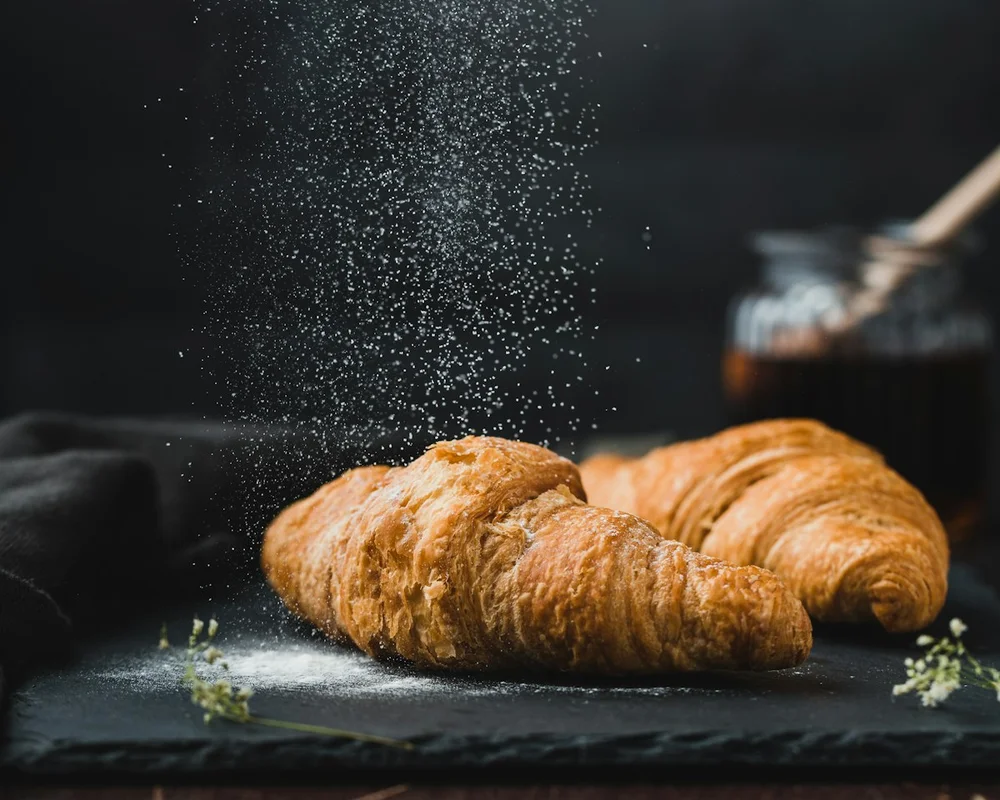
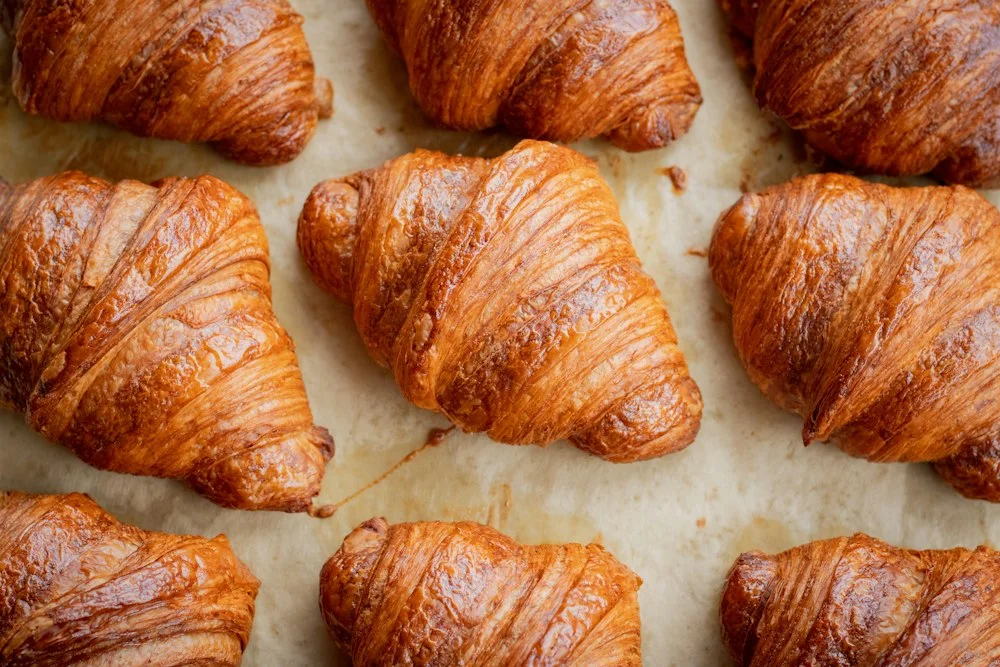
- The Visual: Distinctly crescent-shaped with tapered tips. Baked to a deep golden-amber and chestnut-brown hue rather than pale yellow, signaling full Maillard caramelization on the outer crust.
- The Acoustic: Upon gentle pressure or the first bite, the outer crust produces a pronounced, audible crackle, shedding a delicate shower of micro-thin flakes.
- The Aroma: Intensely fragrant with sweet roasted milk fats, cultured hazelnut undertones, and toasted wheat.
- The Texture: The center retains a creamy, elastic chew (*moelleux*) with distinct honeycomb air pockets. It tastes richly of melted butter without leaving a greasy film on the palate.
How to Experience the Croissant at Peak Warmth
Because of high customer turnover, the baking team at La Maison d'Isabelle bakes fresh trays of croissants throughout the morning and afternoon. Batches come out of the oven approximately every 15 to 25 minutes between 07:00 and 11:30.
💬 The French Phrase to Know
"Bonjour ! Quand sort la prochaine fournée de croissants ?"
(Hello! When is the next batch of croissants coming out?)
☕ Where to Enjoy It
Since the bakery has no indoor tables, grab your bag and walk 30 meters to the stone benches under the trees on Place Maubert, or walk 5 minutes down to the Seine promenade overlooking Île Saint-Louis.
Pricing Context: Historical vs. Current Rates
When La Maison d'Isabelle claimed the 2018 title, their croissants famously sold for €1.00 apiece—a figure widely hailed in the French press as a democratic marvel of culinary value.
Following nationwide inflation in energy and agricultural commodities (with AOP butter prices surging significantly across Europe), the bakery adjusted pricing to approximately €1.20 to €1.40. Even at this revised price, it remains one of the most remarkable bargains in Paris, where boutique patisseries in Saint-Germain and the Marais frequently charge €2.50 to €3.50 for a single viennoiserie.
🌿 Dietary & Allergen Specifications for the Croissant
Vegetarian Status: 100% Lacto-ovo vegetarian. Contains cow's milk butter and whole milk in the dough, and whole egg glaze on the crust. Not suitable for vegans.
Animal Fat Exclusion: Zero animal shortening or non-dairy animal fats are used in the viennoiserie lamination.
Allergens: Contains Wheat/Gluten, Cow's Milk/Dairy, and Eggs. Handled on surfaces where sesame seeds and tree nuts are present.